Where does the nectar used to make our honey come from?

Most commercial and backyard honeybees in the United States are European Honeybees (Apis mellifera). This honeybee variety will typically forage for nectar close to its hive, usually within one mile of the hive (green circle), though it will venture up to two miles away (yellow circle) if the reward is sweet enough! In times of extreme stress such as a nectar dearth, the European Honeybee will travel up to 5 miles from the hive. In Maryland, we typically experience a nectar dearth in the months of July and August - this is when few high quality and high volume nectar producing flowers are available .

What flower nectar is typically used by Maryland honeybees to make their honey?
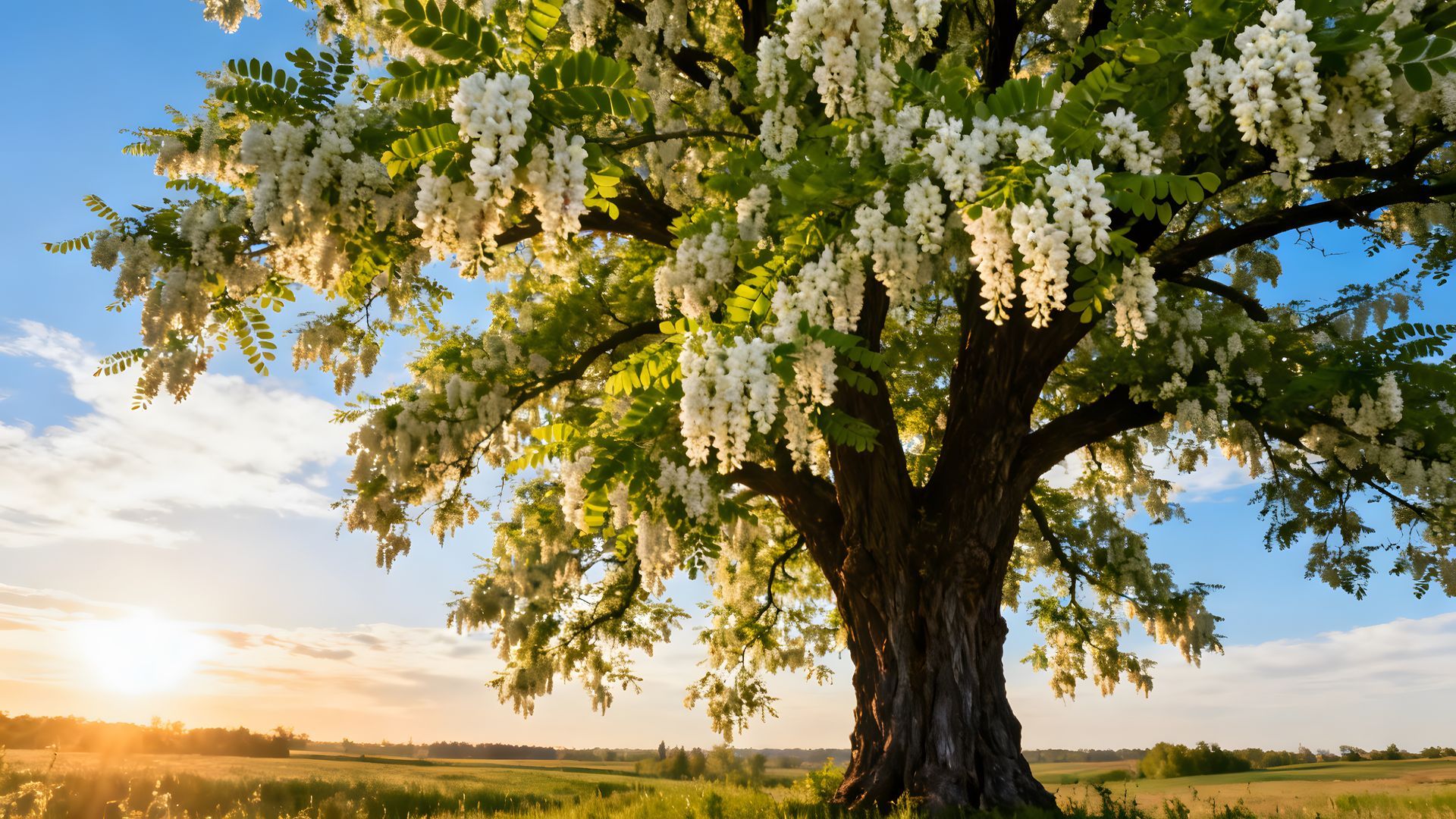
Black Locust Flowers

Honey made from black locust nectar is very light in color (can be almost clear like water) and has a mild, floral taste.


Black Locust in Maryland blooms in early spring, typically in the last week of April. These flowers bloom for about one week. It is the first major nectar flow (abundance of nectar) for Maryland bees. You will usually see these blooms along the highways such as US Rt 50 near Annapolis.

Tulip Poplar

Honey from the tulip poplar tree has a reddish hue and is darker in color than black locust honey. This honey, when compared to black locust honey, has a richer depth similar to molasses.


In the Annapolis area, tulip poplar trees bloom in mid to late spring. These large trees will start blooming about one week after the black locust blooms are spent.

You can identify these trees by the bright yellow and orange flowers that are about 1-2 inches wide. Each flower can hold up to 2 grams of nectar - to a bee this would be a long day to collect. An average honeybee weighs 100mg and can carry 40mg of nectar each trip. It would take 50 flights to move all the nectar from one flower!


These trees are late bloomers starting only after they reach about 20 years old or once they are 40-60 feet tall!

Slide Title

Slide description
Button